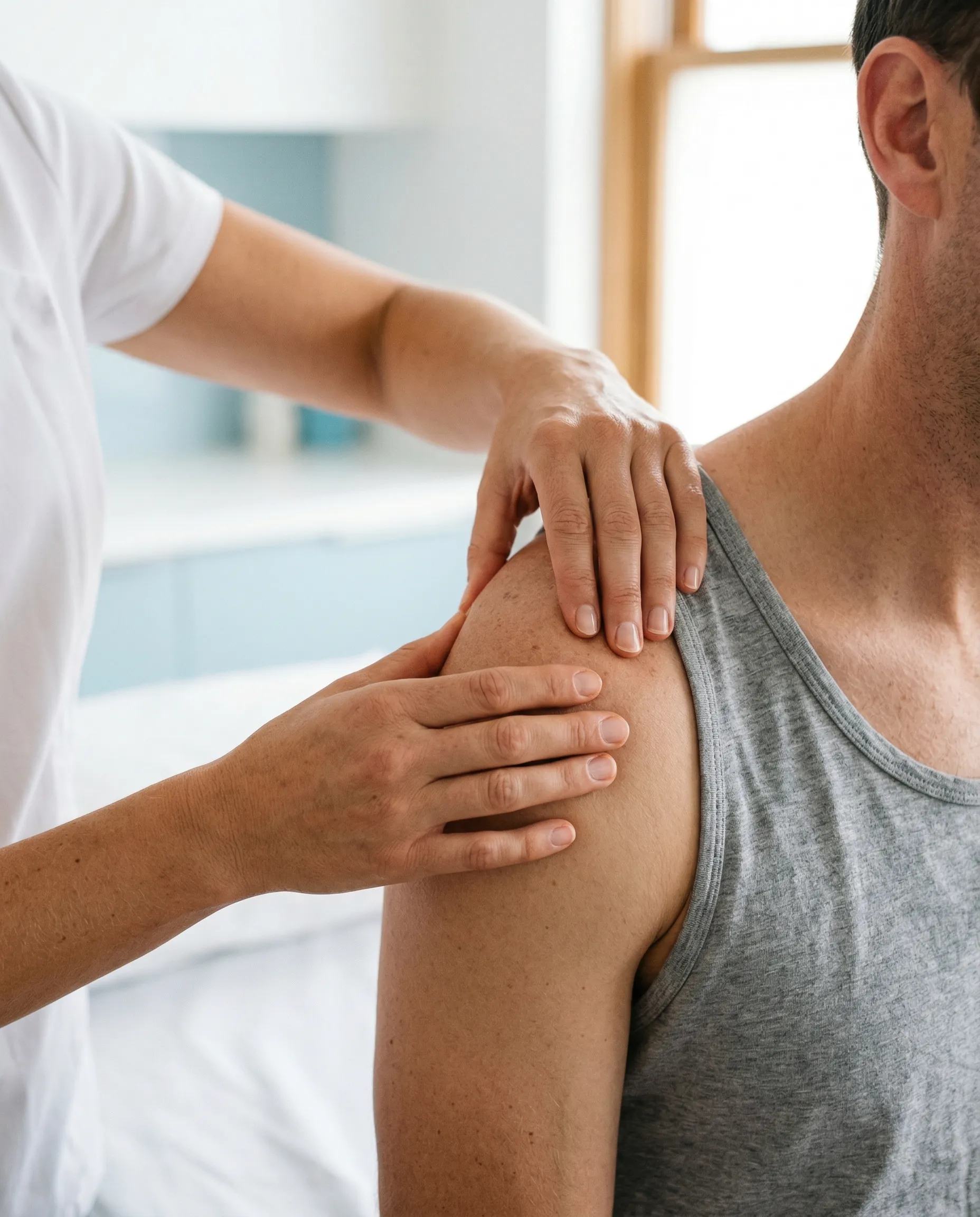
Injury Recovery Protocol
Recovery takes time.
Structure it properly.
Clinically assessed injury recovery support via telehealth. For tissue repair, post-surgery recovery, and persistent musculoskeletal concerns that have not responded as expected. Overseen by registered Australian practitioners.
Clinical Monitoring
Recovery, assessed
and tracked throughout.
Structured recovery support: tissue repair, inflammatory markers, and mobility, assessed at every review.
Recovery trajectories vary by individual. Monitored throughout the protocol by your practitioner.
Protocol Focus Areas
Milestone labels reflect clinical review points, not predicted outcomes. Individual response varies; protocol length may differ. Progress reviewed at every practitioner check-in.
Pain, inflammation, and range of motion. All tracked.
Composite recovery score, updated every check-in.
Clinician-led recovery support, inflammatory marker monitoring, and practitioner oversight — included across your protocol once treatment is clinically approved. Consultation, pathology, medication, and delivery are quoted separately.
Pain and discomfort scores tracked and reviewed by your practitioner at every check-in.
Inflammatory markers and tissue indicators reviewed at defined clinical intervals throughout your protocol.
Initial Consultation
$199
GST-free
Pathology & Medical Assessment
$220
GST-free. Medicines and delivery quoted separately.
How It Works
Your injury recovery support pathway.
Assessment
Injury history, imaging review, and current treatment context reviewed to build a clear picture of your situation via telehealth.
Consultation
A registered Australian practitioner designs a structured recovery protocol specific to your injury profile and clinical history.
Protocol
If deemed clinically appropriate after your consultation, practitioner-approved recovery support is dispensed by an Australian pharmacy and delivered to your address with full administration guidance.
Ongoing Monitoring
Regular practitioner check-ins track pain scores, mobility, and inflammatory markers. Your protocol is adjusted based on your progress.
Is This Right For You
Clinically appropriate for.
Tendon and ligament injuries
Sprains, partial tears, and overuse injuries affecting tendons, ligaments, and connective tissue that have not resolved as expected.
Post-surgical recovery support
Structured support for tissue repair and inflammation management following orthopaedic or soft tissue surgery, assessed by a registered practitioner.
Persistent soft tissue concerns
Ongoing musculoskeletal discomfort from prior injuries or repetitive strain where conventional treatment has not produced the progress expected.